

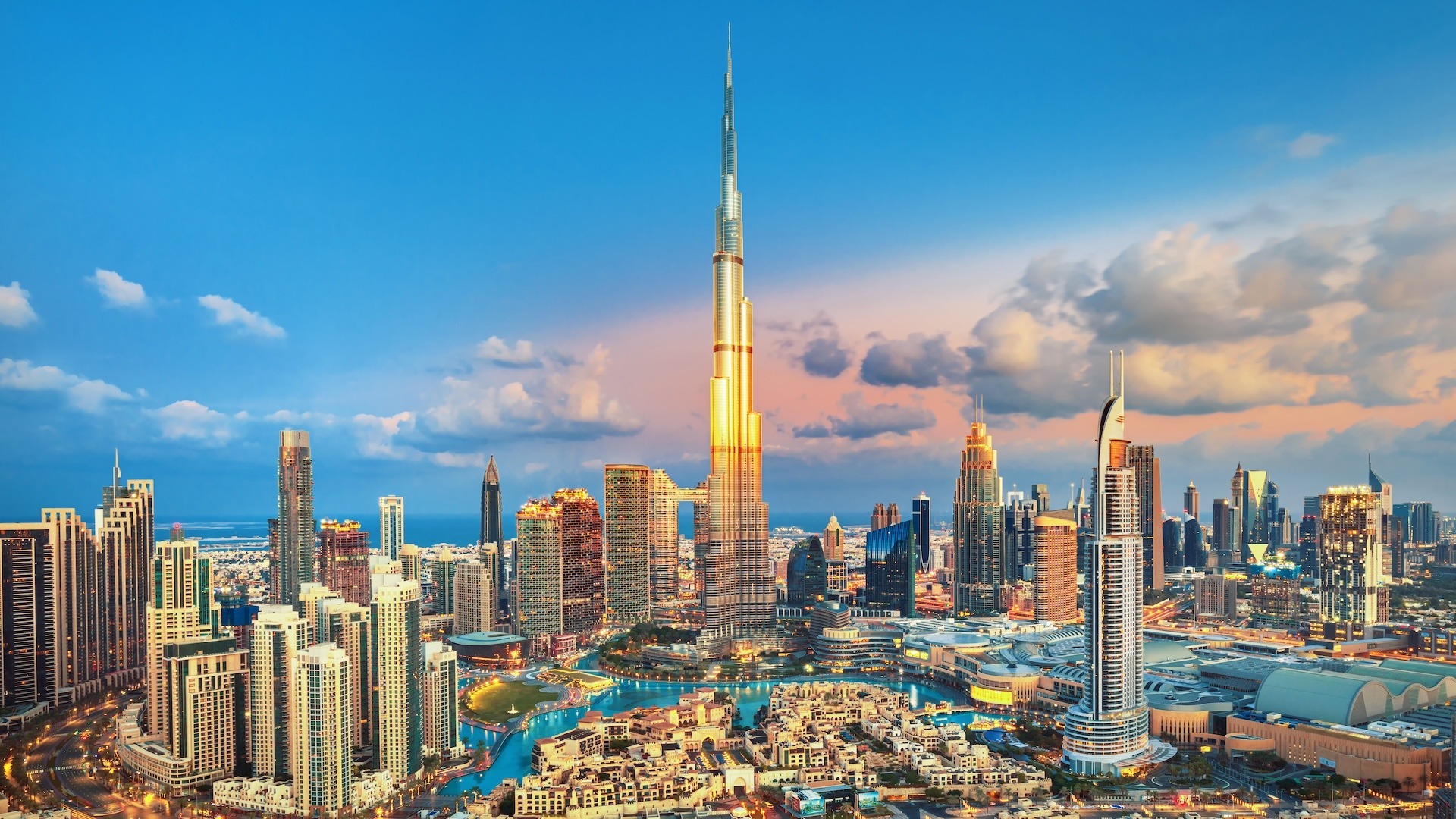
Dubai Real Estate Market Report Q1 2026: AED 252 Billion and Record Foreign Investment.
Dubai’s real estate market has done it again. After a blockbuster 2025 that many analysts predicted was the cyclical peak, the first quarter of 2026 has shattered every major record in the book. This is not merely sustained growth; this is accelerating, institutional-grade expansion that is fundamentally reshaping the emirate’s economic trajectory.
According to the latest data released by the Dubai Land Department (DLD), Q1 2026 was the strongest single quarter in the history of the Dubai property market. We have analyzed the key transaction data, demographic shifts, and infrastructure milestones to bring you this definitive performance breakdown and outlook for the remainder of the year.
This report isn’t just about celebrating the numbers; it is about unpacking why this growth is happening and where the sustainable value still resides for careful capital in H2 2026.
Dubai Property Market Q1 2026: Key Statistics
To grasp the scale of the expansion, we must first look at the defining metrics from January through March 2026, compared to the same period in 2025.
- Total Transaction Value: AED 252 Billion—a breathtaking $31\%$ year-on-year increase.
- Total Deal Volume: 60,303 completed transactions—up $28\%$ compared to Q1 2025.
- Foreign Investment Value: Up $26\%$ by total deployed capital.
- Mortgage Transactions: Increased by $19\%$, indicating growing resident confidence alongside cash capital.
- Ready Property Sales: Increased by $34\%$ by value, highlighting the scramble for immediate yield and utility.
[Q1 2026 Performance Visualization]

Total Value: AED 252B (▲ 31% YoY)
Total Transactions: 60,303 (▲ 28% YoY)
Foreign Investment Capital: (▲ 26% YoY)
The market is moving faster and deeper than ever before. For perspective, the entire year of 2021 recorded AED 300 billion in transactions. We have very nearly hit that 12-month figure in just 90 days.
Why Foreign Investment in Dubai Property Reached Record Levels
The record-breaking Q1 performance was propelled primarily by a surge in high-net-worth (HNW) and institutional foreign capital. What’s driving this consistent influx of global money?
Dubai is no longer viewed as a merely transactional market where investors jump in for short-term flipping. Since 2022, the Emirate has successfully positioned itself as a defensive, safe-haven macro play. While inflation, steep taxation, and political instability erode value in traditional capitals like London, New York, and parts of Europe and Asia, Dubai offers a unique set of competitive advantages.
The Structural Dubai Advantage
- Zero Income and Capital Gains Tax: 100% tax efficiency means net returns are actual returns.
- Currency Peg: The UAE Dirham (AED) is pegged to the US Dollar (USD), providing absolute monetary stability and eliminating the currency risk that plagues emerging markets.
- Freehold Ownership: 100% asset control for foreign nationals within designated investment zones.
- Permanent Residency Pathway: The 10-year Golden Visa, granted to property investors with at least AED 2 million in paid equity, has removed the friction of traditional residency requirements.
Furthermore, these structural benefits align with a surging population that just surpassed 3.8 million and a highly resilient economy that the International Monetary Fund (IMF) projects will grow by $4.5\%$ in 2026, driven by logistics, tourism, and financial services. Global capital is concentrating here because it is chasing certainty and predictability.
Dubai Villa vs Apartment Performance in 2026
When analyzing capital appreciation data, a significant trend is emerging: the villa market is performing at almost double the pace of the apartment segment.
- Villas: Average capital value growth is hovering around $17.7\%$ annually.
- Apartments: Average capital value growth is approximately $10\%$ annually.
The Divergence Story
This bifurcation of performance is not accidental; it is driven by two powerful forces: demand durability and structural scarcity.
The lifestyle preferences shaped during the 2020 pandemic—the intense demand for private outdoor space, larger home footprints, and low-density living—have proved durable. This is not a passing trend. Affluent families relocating to Dubai are looking for permanent homes, and that means villas.
Crucially, villa supply is structurally constrained. You can always build another high-rise apartment tower on a compact plot in Downtown or Business Bay. However, creating a master-planned villa community requires massive tracts of infrastructure-ready land. Dubai is rapidly running out of premium central land plots large enough to host low-density villa concepts. This mismatch between sustained high demand and very slow supply creation ensures that villa capital appreciation will outpace apartments for the foreseeable future.
Off-Plan vs Ready Property: Where Is the Volume?
The perennial debate for Dubai investors is off-plan versus ready. Q1 2026 data shows that both segments are thriving, but in completely different ways.
| Segment | Status in Q1 2026 | Capital Appreciation | Rental Yield Dynamics |
| Off-Plan | Accounts for ~$60\%$ of total transactions | Moderate. Prices are high but the value gap to ready is narrowing. | zero current yield; potential high initial yield on completion. |
| Ready | Accounts for ~$40\%$ of transactions | Rapid. Driven by immediate population inflow. | Strong and rising. Rents are climbing faster than ready sale prices. |
The off-plan market dominates entry-level and mid-market entry points, with attractive payment plans and shiny new communities launching across Dubai South and inland locations.
However, the ready market is where the real capital appreciation is happening. Rents in prime ready areas like Dubai Marina, Downtown, and Business Bay are rising faster than off-plan launch prices in those same areas. Tenants are desperate for units they can occupy today. We are seeing a market split: off-plan controls volume, while ready controls immediate appreciation.
Market Stability: Why 70% Cash Transactions Matter
With total transaction value reaching AED 252 Billion in a single quarter, naturally, questions of market overheating or a “bubble” emerge. However, looking beneath the surface reveals one critical, stabilizing data point that differentiates Dubai from almost every other major global market.
Approximately 70% of all ready-sale Dubai property transactions complete in cash.
The Systemic De-Risking
In heavily mortgaged Western markets (like the UK, Canada, or the USA), high-interest-rate environments create systemic volatility. If a borrower defaults on a mortgage, the bank repossesses and forces a sale, pushing down community values.
Dubai’s market is almost entirely immune to this forced-seller dynamic. If mortgage interest rates rise, it affects only 30% of buyers. If a recession hits, cash buyers do not default. This exceptionally high level of equity (real cash capital) deployed into the market is the single most important asset protecting Dubai from correction cycles. The money here is real, deployed for long-term utility, not leveraged for short-term speculation.
Dubai Property Market H2 2026 Outlook
What does the remainder of 2026 hold? The Q1 numbers provide clear momentum.
- Sustained Growth: Independent real estate consultancies like ValuStrat project a total capital value growth of $10\%$ for the full year 2026, with villas expected to hit that $17.7\%$ figure as the supply constraint continues.
- Rental Moderation: We anticipate rental growth, while remaining positive, will begin to moderate and stabilize. The rental ceiling has been reached in most prime ultra-luxury areas; future rental growth will be concentrated in affordable and mid-market segments.
- Infrastructure is the New Yield Catalyst: The strongest value opportunities for H2 2026 reside in mid-market communities adjacent to new major infrastructure projects. While everyone chases Dubai Marina, the real value is being created in areas being activated by major transport links like the Airport Express Metro and the expansion of Al Maktoum International Airport (DWC).
Conclusion
Dubai Q1 2026 was a record-setter because it is no longer an emerging market; it is a mature, defensive asset class. The 70% cash component makes it structurally stable, and the population growth makes it fundamentally liquid. As we move into H2, successful investment requires focusing less on cyclical trends and more on structural scarce-asset plays, specifically villas, ready properties in central hubs, and mid-market infrastructure beneficiaries.


Leave a comment